

Running a small nonprofit often feels like a balancing act. You are likely operating with a lean team, a tight budget, and a to-do list that never seems to get shorter. You rely heavily on individual donors and perhaps a few grants to keep the lights on. While these are vital revenue streams, there is another avenue that many small organizations overlook because they believe they lack the capacity to pursue it: corporate sponsorships.
The term “corporate sponsorship” often conjures images of massive checks presented at televised galas or logos plastered across sports stadiums. It is easy to assume that businesses are only interested in partnering with national organizations that offer millions of impressions. However, this could not be further from the truth. Small nonprofits possess unique assets—hyper-local impact, niche audience engagement, and authentic community trust—that are incredibly attractive to the right corporate partners.
Securing corporate sponsorships for small nonprofits is not about competing with the giants; it is about leveraging your specific strengths to build mutually beneficial relationships. Whether through direct financial support, in-kind product donations, or corporate grants, businesses in your community are looking for ways to give back. You just need to present them with the right opportunity.
In this guide, we will cover:
- Understanding Corporate Sponsorships
- Why Small Nonprofits Have a Competitive Advantage
- Types of Corporate Support Available to You
- How to Identify the Right Corporate Partners
- Crafting a Sponsorship Proposal That Wins
- Cultivating and Retaining Corporate Relationships
- Wrapping Up & Next Steps
Successful corporate fundraising does not require a dedicated department or a six-figure marketing budget. It requires a strategic approach tailored to your capacity. Let’s explore how you can diversify your revenue and amplify your mission through the power of corporate partnerships.
Understanding Corporate Sponsorships
Before diving into outreach, it is essential to define what a corporate sponsorship actually is and how it differs from a standard donation. A charitable donation is a philanthropic gift given with no string attached, usually motivated by altruism. A corporate sponsorship, on the other hand, is a marketing arrangement. It is a business transaction where a company provides resources to your nonprofit in exchange for specific marketing benefits, such as brand visibility, access to your audience, or positive public relations.
For a small nonprofit, this distinction is critical. When you approach a business for a sponsorship, you are not just asking for help; you are offering a business solution. You are helping them reach new customers, improve their brand image, or engage their employees. Understanding this value exchange is the first step toward confidence in your pitch.
While large corporations have complex Corporate Social Responsibility (CSR) departments, smaller businesses often handle sponsorships through their marketing budgets. This means your pitch needs to appeal to their business goals. Are they trying to get foot traffic into a new store? Are they trying to show the community they care about local issues? Your nonprofit can help them achieve these goals.
Did You Know? According to recent industry studies, 84% of consumers say they are more likely to buy from a company that supports a cause they care about. When you pitch a sponsorship, you are giving that business a way to verify their values to their customers. You are not just asking for money; you are offering them a competitive advantage in the marketplace.
Why Small Nonprofits Have a Competitive Advantage
It is common for small nonprofit leaders to feel intimidated by the corporate sector. You might look at your email list size or your social media following and think it is too small to matter to a business. However, in the world of marketing, “niche” is often more valuable than “broad.”
Small nonprofits offer a depth of engagement that large organizations cannot match. You have personal relationships with your supporters. Your events are intimate and community-focused. When you recommend a partner or display a logo, your audience notices because they trust you. This authenticity is a high-value asset.
Furthermore, small nonprofits are agile. You can customize a sponsorship package to fit a local business’s specific needs without navigating layers of bureaucracy. If a local bakery wants to sponsor your volunteer appreciation night in exchange for social media shoutouts, you can make that happen instantly. A national organization might take months to approve such a partnership.
Local businesses, in particular, prefer to support local causes. A regional bank or a family-owned car dealership wants to be seen supporting the community where their customers live. As a small nonprofit, you are the boots on the ground in that community. You offer the local relevance that national charities simply cannot provide.
Types of Corporate Support Available to You
When we talk about corporate sponsorships for small nonprofits, we are referring to a bucket of opportunities that goes beyond just cash for a gala. Diversifying the types of support you ask for can significantly increase your success rate, especially when working with businesses that might have limited cash flow but ample resources.
Financial Sponsorships
This is the most traditional form of support. A company provides a cash contribution in exchange for recognition. For small nonprofits, this often revolves around events, such as a 5K run, a fundraising dinner, or a community festival. However, you can also seek sponsorship for specific programs. For example, a local tech company might sponsor your STEM education program for a semester. The key is to tie the money to a specific, visible outcome that the sponsor can “own” in their marketing materials.
In-Kind Donations
For many small nonprofits, in-kind donations are just as valuable as cash. This involves a company donating goods or services rather than money. This relieves your budget, allowing you to allocate your limited cash to other operational needs.
Examples of valuable in-kind partnerships include:
- Pro bono services: A local marketing agency designing your annual report, or a law firm reviewing your bylaws.
- Product donations: A grocery store donating food for an event, or a hardware store donating supplies for a renovation project.
- Space use: A local business allowing you to use their conference room for board meetings or their parking lot for a drive-through fundraiser.
Corporate Grants
While similar to sponsorships, corporate grants are usually distributed through a company’s philanthropic arm or foundation and are often less focused on marketing benefits. Even small nonprofits can qualify for these. Many large retailers (like Walmart or Target) have community grant programs specifically designed for local organizations. These grants are often easier to apply for than federal grants and are decided by local store managers who know your community.
Quick Tip
Don’t overlook “Volunteer Grants.” This is a program where companies donate money to nonprofits based on the number of hours their employees volunteer. If you have volunteers who work for major corporations, you might already be eligible for these funds without doing any extra work. Ask your current volunteers to check their employer’s benefits portal.
How to Identify the Right Corporate Partners
One of the biggest mistakes small nonprofits make is using a “spray and pray” approach—sending generic requests to every business in the phone book. This is a waste of your limited time. To secure corporate sponsorships for small nonprofits, you need to be strategic and focused.
Start With Your Inner Circle
The warmest lead is one you already have. Look at your current donor list, volunteer roster, and board of directors. Where do they work? If you have a devoted volunteer who works at a local accounting firm, that firm is a prime candidate for sponsorship because they already have an employee championing your cause.
Analyze Your Vendor List
Who is your organization currently paying? Your insurance broker, your bank, your landlord, or your printing company are all businesses that profit from your existence. They have a vested interest in maintaining a good relationship with you. It is entirely appropriate to ask them to support your upcoming event or program.
Look for Mission Alignment
Research businesses in your area that have a mission or customer base similar to yours. If you run a youth sports league, look for sporting goods stores, orthopedic clinics, or family restaurants. If you run an animal shelter, look for pet stores, groomers, or dog-friendly breweries. The pitch is much easier when the business can intuitively see why their customers would care about your cause.
Research Local Community Grants
Many national corporations have a local footprint. Banks, utility companies, and large retailers often have budgets specifically for the communities where they have branches or stores. Check the “Community” or “Corporate Responsibility” pages of their websites. Look specifically for “Community Grants” or “Local Sponsorships.”
Crafting a Sponsorship Proposal That Wins
Once you have identified a prospect, you need to make the ask. For small nonprofits, your proposal doesn’t need to be a glossy, fifty-page magazine. It needs to be clear, professional, and focused on value.
The Introductory Letter
Keep it brief. Acknowledge who they are and why you are contacting them specifically. “We admire [Company Name]’s commitment to [Community Value], which aligns perfectly with our work at [Nonprofit Name].” This shows you have done your homework.
The Audience Profile
This is the most important part for the business. Tell them who they will reach by sponsoring you. Do not just say “the community.” Be specific. “Our event reaches 500 local parents, primarily ages 30 to 50, who live in [Specific Neighborhoods].” This helps the business decide if your audience matches their target customer.
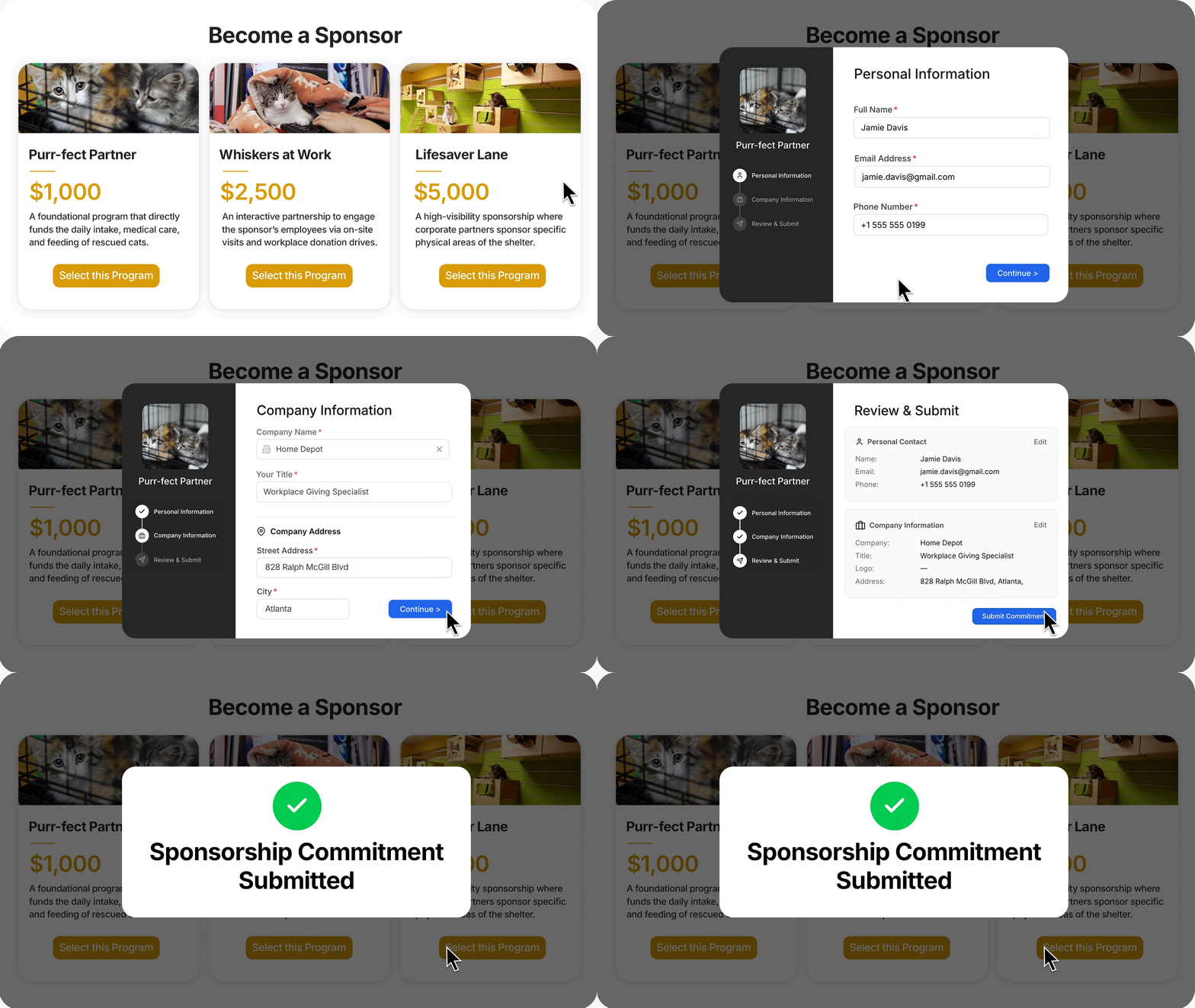
Sponsorship Tiers
Create distinct levels of investment so the business has options. For a small nonprofit, you might have tiers like:
- Community Partner ($250): Logo on the website and a social media shoutout.
- Silver Sponsor ($500): The above, plus logo on event t-shirts.
- Gold Sponsor ($1,000): The above, plus a booth at the event and a verbal thank you from the stage.
Be sure to clearly list the deliverables for each tier. Businesses like to know exactly what they are buying.
|
Visuals and Storytelling
Use high-quality photos of your work. If you are a food pantry, show a picture of a full box of food. If you are an arts organization, show kids painting. Visuals create an emotional connection that text cannot achieve alone. Include a short testimonial from someone you have served to humanize the impact.
Quick Tip
Always include a “Custom” option. Some businesses might want to support you but don’t fit neatly into a tier. Add a line that says, “We are happy to customize a sponsorship package to meet your unique marketing goals.” This flexibility is a superpower for small nonprofits.
Cultivating and Retaining Corporate Relationships
Securing the sponsorship is just the beginning. The real work—and the path to sustainable revenue—lies in how you treat that sponsor after they say yes. Retention is far more cost-effective than acquisition. You want these partners to renew year after year.
Deliver on Your Promises (Fulfillment)
If you promised to put their logo on the website, do it immediately. If you promised a social media post, ensure it goes out on time and tags their business correctly. Nothing burns a bridge faster than failing to deliver the marketing benefits you sold. Create a checklist for each sponsor to ensure no deliverable slips through the cracks.
The Impact Report
Within a month after the event or the end of the sponsorship period, send a simple report. It doesn’t have to be long. A one-page PDF is perfect. Include:
- Metrics: How many people attended? How many social media impressions did you get?
- Photos: Pictures of their logo at the event or their employees volunteering.
- Impact: “Thanks to your $1,000 sponsorship, we provided 200 meals to families.”
This report proves ROI (Return on Investment) and gives the marketing manager ammunition to justify renewing the sponsorship next year.
Authentic Stewardship
Treat your corporate contacts like humans, not ATMs. Send a handwritten thank-you note to the person who signed the check. If you see their business in the news, send a quick congratulatory email. Invite them to see your mission in action, not just to check-presentation photo ops. When a business feels personally connected to your mission and appreciated by your leadership, they become long-term partners.
Corporate Volunteering as Stewardship
Invite the sponsor’s employees to volunteer as a group. This deepens the relationship significantly. When employees have a positive experience volunteering with you, they become internal advocates for your nonprofit, making it much harder for the company to cut your funding in the future.
Wrapping Up & Next Steps
Corporate sponsorships for small nonprofits are not only possible; they are a vital component of a diversified fundraising strategy. By shifting your mindset from “charity” to “partnership,” identifying local businesses with aligned values, and delivering excellent donor stewardship, you can unlock a new stream of support that helps your organization thrive.
Remember, you have something valuable to offer. You offer access to a passionate local community and the opportunity for a business to demonstrate its values. You are not asking for a handout; you are inviting them to be part of a solution.
Ready to get started?
- Audit your assets: List every event, newsletter, and social media channel where you could place a sponsor’s logo.
- Build your prospect list: Identify 10 local businesses that you or your board have a connection to.
- Draft your proposal: Create a simple one-page sponsorship menu with three clear tiers.
- Make the ask: Reach out to your warmest lead this week.
To learn how to unlock this revenue stream, check out our corporate sponsorships guide. Start small, deliver on your promises, and watch your corporate partnerships grow. You have the capacity to do this, and your mission deserves the support.